
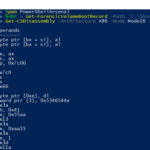
PowerShellArsenal is basically PowerShell for reverse engineering in a module format. The module can be used to disassemble managed and unmanaged code, perform .NET malware analysis, analyse/scrape memory, parse file formats and memory structures, obtain internal system information, etc. PowerShellArsenal is comprised of the following tools: Disassembly – Disassemble native and managed code. MalwareAnalysis – […]
reverse-engineering
Frida – Dynamic Code Instrumentation Toolkit
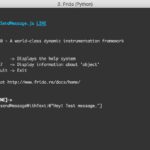
Frida is basically Greasemonkey for native apps, or, put in more technical terms, it’s a dynamic code instrumentation toolkit. It lets you inject snippets of JavaScript into native apps on Windows, Mac, Linux, iOS and Android. Frida also provides you with some simple tools built on top of the Frida API. These can be used […]
Malwarebytes Bug Bounty Program Goes Live
So Malwarebytes bug bounty program is live, the official name is actually Malwarebytes Coordinated Vulnerability Disclosure Program – what a mouthful (guidelines here). It’s good to see, bug bounty programs typically tend to have a nett positive effect and end in win-win situations for researchers and software vendors alike. In an effort to encourage researchers […]
Radare – The Reverse Engineering Framework
Radare started out as a simple command line interface for a hexadecimal editor supporting 64 bit offsets to make searches and recovering data from hard-disks. It has evolved into a project that is composed of a hexadecimal editor as the central point of the project with assembler/disassembler, code analysis, scripting features, analysis and graphs of […]
Capstone – Multi-platform, Multi-architecture Disassembly Framework
Capstone is a lightweight multi-platform, multi-architecture disassembly framework. The target of the author is to make Capstone the ultimate disassembly engine for binary analysis and reversing in the security community. It is one of a very few disassembly frameworks that can support multi-architectures. So far, it can handle 4 most important architectures: ARM, ARM64 (aka […]
CrowdRE – Crowdsourced Reverse Engineering Service From CrowdStrike
Reversing complex software quickly is challenging due to the lack of professional tools that support collaborative analysis. The CrowdRE project aims to fill this gap. Rather than using a live distribution of changes to all clients, which has proven to fail in the past, it leverages from the architecture that is being used with success […]
Rec Studio 4 – Reverse Engineering Compiler & Decompiler
REC Studio is an interactive decompiler. It reads a Windows, Linux, Mac OS X or raw executable file, and attempts to produce a C-like representation of the code and data used to build the executable file. It has been designed to read files produced for many different targets, and it has been compiled on several […]
IOCTL Fuzzer v1.2 – Fuzzing Tool For Windows Kernel Drivers
IOCTL Fuzzer is a tool designed to automate the task of searching vulnerabilities in Windows kernel drivers by performing fuzz tests on them. The fuzzer’s own driver hooks NtDeviceIoControlFile in order to take control of all IOCTL requests throughout the system. While processing IOCTLs, the fuzzer will spoof those IOCTLs conforming to conditions specified in […]
BitBlaze – Binary Analysis Platform For Computer Security
Binary analysis is imperative for protecting COTS (common off-the-shelf) programs and analyzing and defending against the myriad of malicious code, where source code is unavailable, and the binary may even be obfuscated. Also, binary analysis provides the ground truth about program behavior since computers execute binaries (executables), not source code. However, binary analysis is challenging […]
REMnux: A Linux Distribution For Reverse-Engineering Malware
REMnux is a lightweight Linux distribution for assisting malware analysts in reverse-engineering malicious software. The distribution is based on Ubuntu and is maintained by Lenny Zeltser. REMnux is designed for running services that are useful to emulate within an isolated laboratory environment when performing behavioral malware analysis. As part of this process, the analyst typically […]


