The latest splash has been made by the Petya or NotPetya Ransomware that exploded in Ukraine and is infecting companies all over the World. It’s getting some people in deep trouble as there’s no way to recover the files once encrypted. The malware seems to be trying to hide its intent as it doesn’t really […]
Cryptography
OneLogin Hack – Encrypted Data Compromised

The OneLogin hack is blowing up now it seems like whoever got access can also decrypt encrypted customer data which is just about AS BAD as it can get for a password/identity management service. Now I’m a HUGE supporter of password management tools as I’ve mentioned many times here, so anyone who signed up for […]
sheep-wolf – Exploit MD5 Collisions For Malware Detection
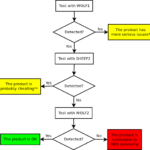
sheep-wolf is a tool to help you Exploit MD5 Collisions in software, specially malware samples which are commonly detected using MD5 hash signatures. and then a malicious one (Wolf) that have the same MD5 hash. Please use this code to test if the security products in your reach use MD5 internally to fingerprint binaries and […]
Pybelt – The Hackers Tool Belt
Pybelt is a Python-based hackers tool belt capable of cracking hashes without prior knowledge of the algorithm, scanning ports on a given host, searching for SQLi vulnerabilities in a given URL, verifying that your Google dorks work like they should, verifying the algorithm of a given hash, scanning a URL for XSS vulnerability, and finding […]
WannaCry Ransomware Foiled By Domain Killswitch
Whilst I was away on a tropical island enjoying myself the Infosec Internet was on fire with news of the global WannaCry ransomware threat which showed up in the UK NHS and was spreading across 74 different countries. The Ransomware seems to be the first that is P2P using an SMB exploit from the NSA […]
pemcracker – Tool For Cracking PEM Files
pemcracker is a tool for cracking PEM files that are encrypted and have a password. The purpose is to attempt to recover the password for encrypted PEM files while utilising all the CPU cores. Inspired by Robert Graham’s pemcrack, it still uses high-level OpenSSL calls in order to guess the password. As an optimisation, instead […]
spectrology – Basic Audio Steganography Tool
spectrology is a Python-based audio steganography tool that can convert images to audio files with a corresponding spectrogram encoding, this allows you to hide hidden messages via images inside audio files. Using this tool you can select range of frequencies to be used and all popular image codecs are supported. Usage
|
1 2 3 4 5 6 7 8 9 10 11 12 13 14 15 16 17 18 |
usage: spectrology.py [-h] [-o OUTPUT] [-b BOTTOM] [-t TOP] [-p PIXELS] [-s SAMPLING] INPUT positional arguments: INPUT Name of the image to be converted. optional arguments: -h, --help show this help message and exit -o OUTPUT, --output OUTPUT Name of the output wav file. Default value: out.wav). -b BOTTOM, --bottom BOTTOM Bottom frequency range. Default value: 200. -t TOP, --top TOP Top frequency range. Default value: 20000. -p PIXELS, --pixels PIXELS Pixels per second. Default value: 30. -s SAMPLING, --sampling SAMPLING Sampling rate. Default value: 44100. |
Example
|
1 |
python spectrology.py test.bmp -b 13000 -t 19000 |
You […]
HashData – A Command-line Hash Identifying Tool
HashData is a Ruby-based command-line REPL Hash Identifying Tool with support for a lot of different (most popular) hash types. Installation
|
1 |
$ gem install hashdata |
Usage Command Line When installed, run hashdata and paste in hashes when prompted. Library Example Script:
|
1 2 3 |
require 'hashdata' hash = HashData.new puts(hash.check_type("1111111111111",'DES')) |
The above should output true. The library only matches the start of your second input, this […]
European Commission Pushing For Encryption Backdoors
The debate surrounding encryption backdoors has been raging on for years with governments (that typically don’t really understand the things they are pushing for) requesting all software have government ‘secured’ backdoor keys. This is now getting more serious in Europe with the EC actually forcing the issue (in a passive aggressive kind of way for […]
HashPump – Exploit Hash Length Extension Attack
HashPump is a C++ based command line tool to exploit the Hash Length Extension Attack with various hash types supported, including MD4, MD5, SHA1, SHA256, and SHA512. There’s a good write-up of how to use this in practical terms here: Plaid CTF 2014: mtpox Usage
|
1 2 3 4 5 6 7 8 9 10 11 |
$ hashpump -h HashPump [-h help] [-t test] [-s signature] [-d data] [-a additional] [-k keylength] HashPump generates strings to exploit signatures vulnerable to the Hash Length Extension Attack. -h --help Display this message. -t --test Run tests to verify each algorithm is operating properly. -s --signature The signature from known message. -d --data The data from the known message. -a --additional The information you would like to add to the known message. -k --keylength The length in bytes of the key being used to sign the original message with. Version 1.2.0 with CRC32, MD5, SHA1, SHA256 and SHA512 support. <Developed by bwall(@botnet_hunter)> |
You can download HashPump here:
|
1 2 3 4 5 |
$ git clone https://github.com/bwall/HashPump.git $ apt-get install g++ libssl-dev $ cd HashPump $ make $ make install |
Or read more […]